


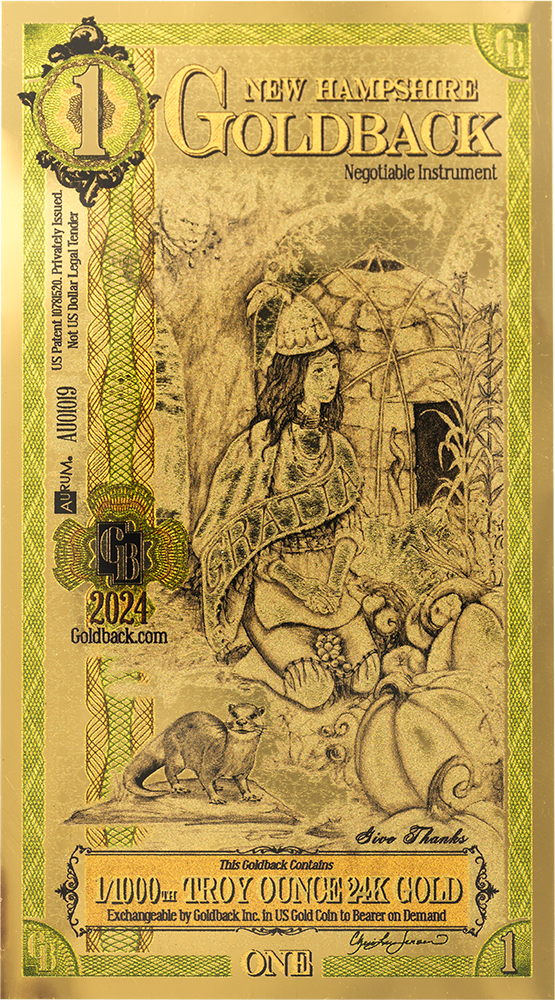
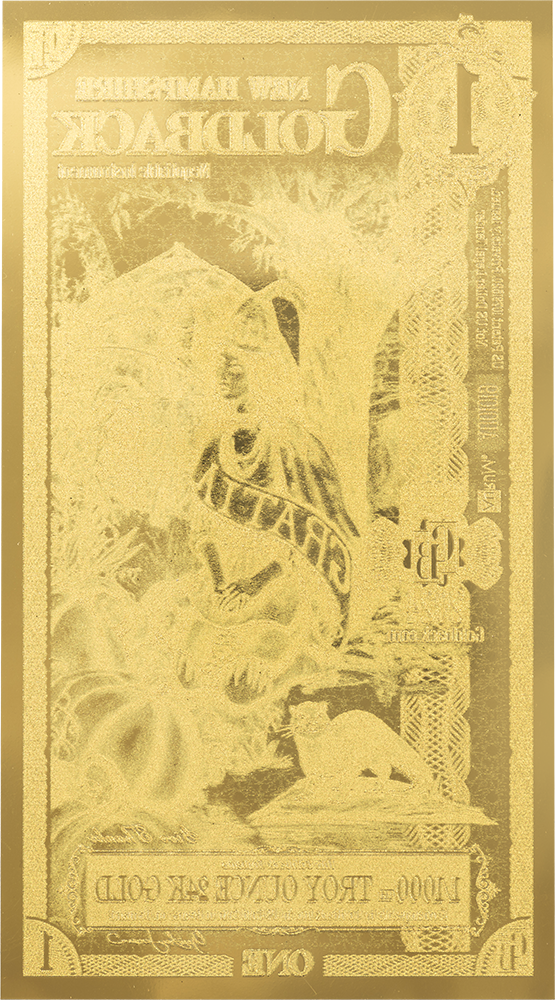
Evaluating the 1 New Hampshire Goldback Gold Note: An Investment-Focused Perspective
Exploring the Practicalities and Potential Portfolio Role of Ultra-Fractional Gold Currency
The world of gold investing is broad, ranging from large bullion bars to the smallest, most intricate forms of physical gold. The 1 New Hampshire Goldback Gold Note occupies a unique niche within this spectrum. At first glance, its weight of 0.001 troy ounce and .9999 fine gold purity may seem modest compared to traditional bullion products. Yet, its distinctive attributes and the approach it represents warrant a careful look from any investor seeking to diversify their holdings or add flexibility to their precious metals portfolio.
Liquidity is a cornerstone consideration in any investment, especially for physical precious metals. The New Hampshire Goldback’s ultra-small denomination makes it one of the most divisible forms of gold available to private investors. While most bullion coins and bars require buyers and sellers to transact in increments of a gram or more, the Goldback’s lightweight offers an unparalleled level of flexibility. This can be particularly useful for those who anticipate the need to sell or trade only small amounts of gold at a time. However, the niche nature of Goldbacks means liquidity is strongest within communities and networks familiar with the product. Outside these circles, recognition and resale may take more effort compared to standard coins or bars.
Recognizability is crucial when it comes to precious metals. Mainstream bullion coins like the American Eagle or Canadian Maple Leaf enjoy global recognition, which can make them easier to sell almost anywhere. Goldbacks, on the other hand, are a relatively new product. Their distinctive note-like appearance, complete with artistic designs and anti-counterfeiting features, sets them apart but may also lead to hesitation among buyers unfamiliar with the format. Over time, as awareness grows and more dealers handle Goldbacks, this issue may diminish, but currently, their recognizability is largely confined to informed collectors and specialized dealers.
When analyzing premium, it is important to consider how the price of a Goldback compares to its gold content. The 1 New Hampshire Goldback generally carries a higher premium over spot price than generic bullion bars or coins. This is a result of its intricate manufacturing process, its status as a novelty item, and the extremely small amount of gold contained in each note. For investors whose primary goal is acquiring as much gold as possible for the lowest cost per ounce, traditional bullion will likely offer better value. On the other hand, some buyers may find the additional cost justifiable given the Goldback’s unique usability as a fractional currency and its appeal as a collectible item.
Within a diversified portfolio, the 1 New Hampshire Goldback serves a specialized role. Its ultra-fractional nature makes it ideal for those interested in barter scenarios or who want to be prepared for a wide range of economic contingencies. While larger gold products are well-suited for wealth preservation and long-term storage, Goldbacks provide a practical way to hold gold in a form that can theoretically be used for small transactions. This utility can be appealing for those who value preparedness or want to introduce precious metals to younger collectors in a tangible, accessible way.
Of course, there are trade-offs to consider. The main advantage of the Goldback is its divisibility, but this comes at the cost of premium. Each note contains just one-thousandth of a troy ounce of gold, so the actual metal value is quite low relative to the total price paid. This means that for sizable investments, accumulating significant gold weight in Goldbacks would be inefficient compared to standard bullion. Additionally, while the notes are crafted to be durable, thin gold is inherently more susceptible to wear or damage than coins or thick bars, so appropriate handling and storage are essential.
Security is another important factor for investors. The New Hampshire Goldback incorporates sophisticated anti-counterfeiting measures, including detailed micro-printing and complex imagery, to help ensure authenticity. These features are designed to reassure both buyers and recipients of the note’s legitimacy. Still, because the product is less familiar to the general public, it is prudent to buy only from reputable sources and keep documentation that can help verify authenticity if you ever decide to resell.
Collectors may also be drawn to the Goldback’s artistic and historic motifs, which are thoughtfully designed and unique to each state series. For some buyers, the aesthetic and educational appeal of these notes is a significant factor, adding a layer of enjoyment to ownership that goes beyond pure investment. While this does not necessarily translate to increased resale value, it can enhance satisfaction and engagement for those who appreciate numismatic qualities.
For investors considering Goldbacks as a hedge against inflation or currency devaluation, it is important to recognize their benefits and limitations. While they do provide exposure to physical gold, the high premium means that market price increases must be substantial before these notes would be profitable to sell relative to their purchase cost. They are best viewed as a supplement to more traditional holdings, offering flexibility and divisibility rather than serving as the foundation of a precious metals investment strategy.
Ultimately, the 1 New Hampshire Goldback Gold Note is a specialized addition to the precious metals landscape. Its primary strengths are its ultra-fractional size, artistic design, and potential utility in small-scale transactions. For investors who value these attributes, and who are comfortable with the associated premiums and lower mainstream recognizability, Goldbacks can play a unique supporting role in a diverse portfolio. As with any investment, careful consideration of goals, budget, and risk tolerance will help determine whether this product aligns with your overall strategy.

