



A Comprehensive Guide to Buying the 1 Idaho Goldback Gold Note
Understanding Value, Premiums, and Practical Insights for the Modern Goldback Collector or Investor
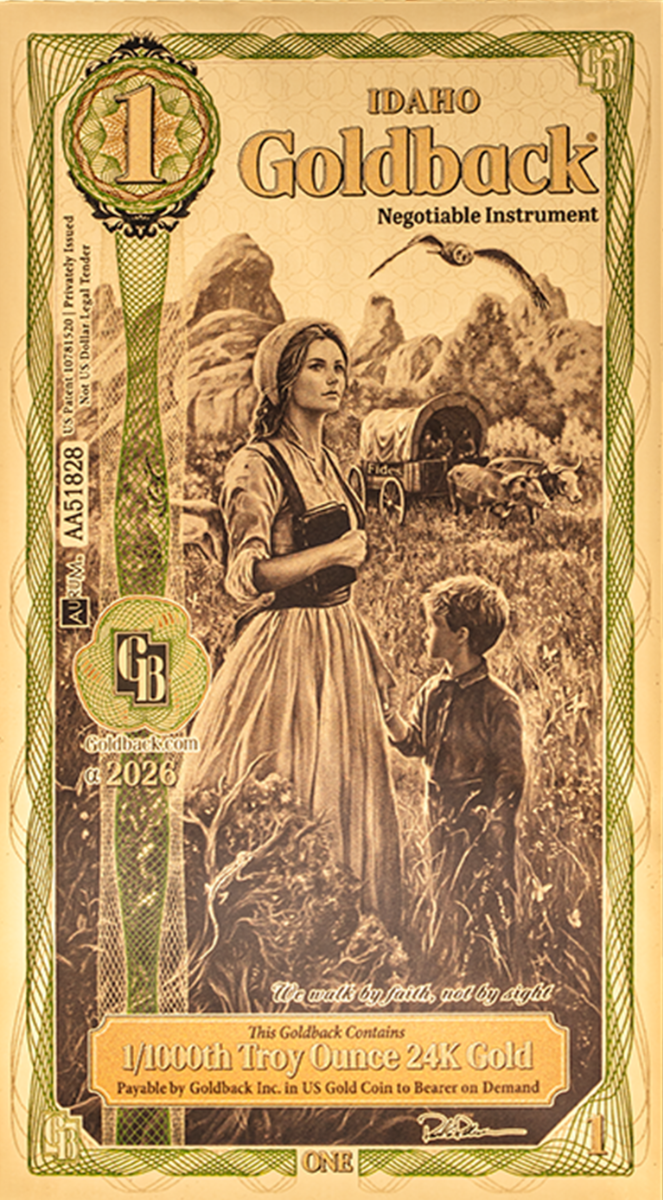
The 1 Idaho Goldback Gold Note is an innovative product in the world of physical gold, representing a blend of artistry, technology, and practical value. Unlike traditional bullion coins or bars, Goldbacks are thin, flexible notes embedded with precise amounts of 24-karat gold. Each 1 Idaho Goldback contains 1/1000 of a troy ounce of gold, which may seem small, but this micro-denomination allows for fractional ownership of gold in a spendable, physically tangible form. The .9999 purity attests to the high standard of gold content, providing buyers with confidence in the quality and value they receive.
Goldbacks appeal to a diverse audience. They are particularly attractive to those interested in alternative currencies, collectors who appreciate unique designs, and individuals who seek to hold gold in small, highly divisible increments. For people who want to make small purchases, barter, or simply diversify their tangible assets, Goldbacks offer a level of flexibility that traditional bullion products cannot match. The Idaho series features intricate artwork celebrating local themes, adding another layer of interest for numismatists and those who appreciate fine craftsmanship.
When considering the price of a 1 Idaho Goldback, it is important to understand the concept of premiums. The price is not solely based on the raw gold content, but rather includes a premium over the spot price of gold. This premium covers the costs of manufacturing, design, and distribution, as well as the unique benefits Goldbacks offer compared to standard gold products. The precise, high-tech process required to embed gold evenly across the thin note, along with the security features and detailed artistry, contribute to the overall cost.
The premium on Goldbacks is generally higher, on a percentage basis, than on larger gold bars or coins. This is due in part to the cost of producing such small, intricate units and the value of their practical divisibility. While buyers pay more per ounce for Goldbacks than for larger bullion pieces, they gain the advantage of holding gold in an easily spendable and recognizable form. The trade-off is between absolute lowest cost per ounce and maximum utility or flexibility. For many, especially those interested in preparedness or barter, that extra cost is justified.
Goldback pricing is also influenced by market demand and availability. Because these notes are popular among collectors and those seeking alternative currency, fluctuations in demand can affect premiums. Additionally, as the underlying gold spot price changes, the base component of the price moves accordingly. However, the premium tends to remain relatively stable unless there are significant shifts in production costs or collector interest. Buyers should be aware of these dynamics and consider their objectives when purchasing.
Shipping, insurance, and delivery are integral parts of the Goldback buying experience. Reputable dealers ensure that Goldbacks are packaged securely to prevent damage during transit. Despite their thinness, Goldbacks are surprisingly resilient but can be creased if mishandled. Most dealers include insurance in the shipping cost to protect buyers from loss or theft while the product is in transit. Tracking is typically provided so buyers can monitor the progress of their shipment and plan for its arrival. Delivery times vary depending on the dealer’s processing and the chosen shipping method, but most buyers receive their Goldbacks within a few business days after payment clears.
For buyers considering larger quantities, shipping policies may include free shipping thresholds or bulk discounts. It is advisable to check the terms before completing a purchase, as this can affect the total cost. Always ensure that the seller uses discreet packaging and offers clear communication throughout the shipping process. If a package is lost or damaged, reputable dealers will assist in claims and replacement, providing peace of mind for buyers making a valuable purchase.
Storage and handling are important considerations after delivery. Goldbacks should be kept flat and away from excessive moisture, heat, or direct sunlight. Many collectors choose to store individual notes in protective sleeves or albums to preserve their condition and value. Because of their small size and flexibility, Goldbacks are easier to hide or transport than larger bullion pieces, which can be an advantage for those concerned with privacy or portability. However, their light weight and thinness also mean that extra care should be taken to prevent accidental loss or damage.
For newcomers to Goldbacks, it is helpful to remember that these notes are not intended to be counterfeit-proof currency in the traditional sense but are rather a voluntary local medium of exchange and a collectible. Their gold content is independently verified and guaranteed by the manufacturer, and reputable dealers provide certificates of authenticity or guarantee their legitimacy. If you plan to use Goldbacks for barter or trade, it is wise to educate potential counterparts about the product’s features and value.
In terms of investment, the 1 Idaho Goldback is best seen as a complement to larger gold holdings rather than a primary vehicle for wealth preservation. Its chief virtues are divisibility, portability, and recognizability. While the premium may not be recouped as easily as with larger bullion, the utility and novelty can make Goldbacks a worthwhile addition to a diversified portfolio. For those who appreciate the intersection of art, technology, and tangible value, the 1 Idaho Goldback Gold Note is a compelling choice.

