



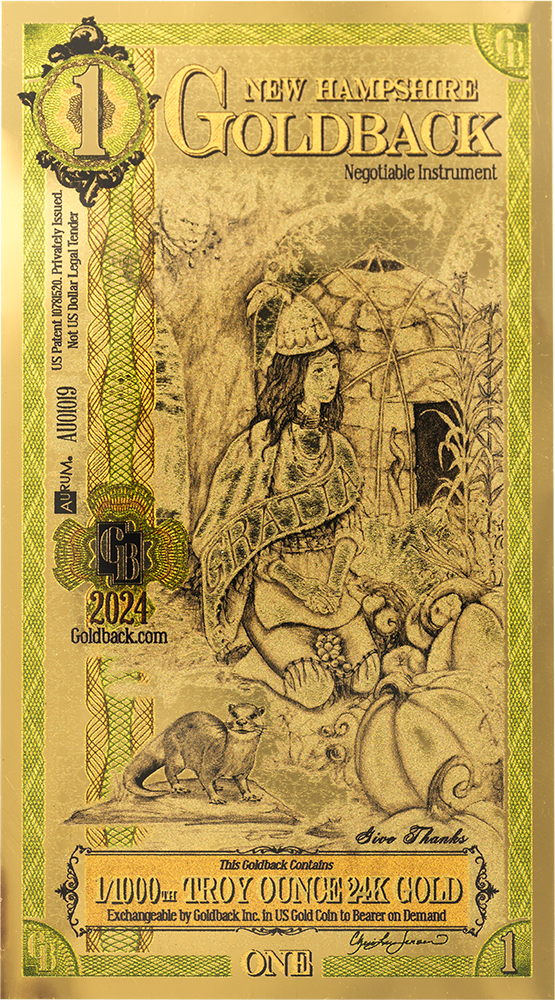
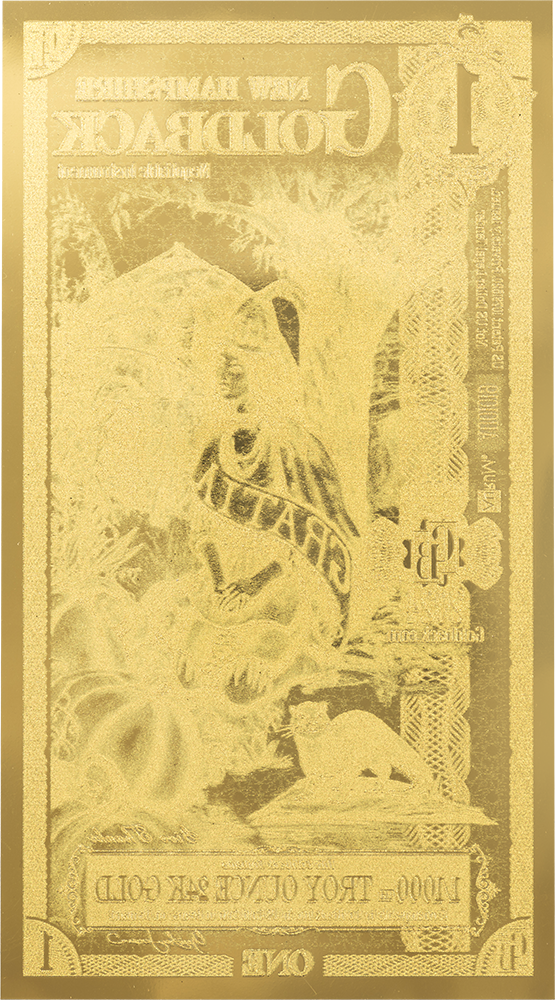
1 New Hampshire Goldback Gold Note: A Collector’s Review and Comparison
Exploring the Unique Appeal and Practical Uses of Goldback Notes Versus Traditional Gold Bullion
For collectors and investors interested in innovative forms of physical gold, the 1 New Hampshire Goldback Gold Note presents an intriguing alternative to traditional bullion coins and bars. While conventional gold products have been the mainstay of portfolios for decades, Goldback notes introduce a fresh approach by blending artistry, portability, and high purity in a format that stands out. Understanding how this product compares to similar options, and what makes it especially collectible, is key for anyone considering an addition to their precious metals holdings.
At the heart of the Goldback’s appeal lies its unique construction. Each note contains precisely 1/1,000th of a troy ounce of .9999 fine gold, encapsulated within a flexible, polymer-laminated note. This format is unlike the rigid feel of a coin or bar. The gold is spread in an ultra-thin layer, creating a lightweight piece that is easy to carry and resistant to the wear and tear that would typically threaten delicate gold foils. For collectors, this innovative technology is itself a talking point and a testament to the evolution of precious metals products.
Compared to traditional fractional gold coins, such as 1/20 oz or 1/10 oz pieces, the Goldback note represents an even smaller denomination of gold. This ultra-fractionalization is significant for two reasons. First, it allows for the acquisition of gold at a much lower entry price point, which is reflected in the fact that the 1 New Hampshire Goldback is available from around $8.44. Second, it opens the door for practical, small-scale transactions, appealing to those interested in using gold as a medium of exchange rather than solely a store of value.
When evaluating collectibility, the Goldback’s design immediately sets it apart. Each New Hampshire Goldback note features intricate, locally-inspired artwork, produced using advanced vacuum deposition technology to apply the gold. The result is a visually stunning piece that appeals to those who appreciate the fusion of fine art and precious metals. Collectors often seek out Goldbacks for their aesthetic merit as much as their intrinsic value, and the limited edition nature of each series can further enhance their desirability over time.
In direct comparison to more conventional bullion coins, such as the American Gold Eagle or Canadian Gold Maple Leaf, the Goldback offers a very different experience. Coins typically emphasize heft, recognizability, and their role as investment-grade assets. Their premiums over spot price are generally lower on a per-ounce basis, making them more cost-effective for those focused strictly on gold accumulation. Goldbacks, on the other hand, command a higher premium relative to their gold content due to their manufacturing complexity and novelty. For investors looking to maximize gold weight per dollar, coins and bars remain the superior choice.
However, the Goldback’s higher premium is not without justification. Its unparalleled divisibility and the ability to use it in barter situations give it a distinct place in the market. For those who envision scenarios where extremely small units of gold could be practical for everyday exchanges, the Goldback is unmatched. It is also appealing to new collectors, educational buyers, and those seeking gifts that combine beauty, value, and conversation-starting uniqueness. The tactile and visual aspects of the note, combined with its genuine gold content, make it a popular introduction to tangible assets.
The physical nature of Goldbacks also merits discussion. Despite their thinness, the polymer layer provides protection against fingerprints, creasing, and environmental damage. This is a particular advantage over gold leaf or foil, which is notoriously fragile. Compared to coins, there is less risk of surface abrasion or loss of sharp detail, ensuring long-term preservation of both the gold and the art. For collectors who value longevity and display potential, this durability is a significant plus.
For buyers trying to decide between Goldbacks and traditional gold, several factors should guide the choice. If the primary objective is to build a portfolio of gold with the lowest possible premiums, fractional coins and bars are likely preferable. These products are globally recognized, widely traded, and closely track the spot price of gold. If, instead, the goal is to own gold that is both beautiful and highly divisible, or to gift gold in an accessible, visually striking form, Goldbacks excel. They also serve as a bridge for those interested in the idea of gold as a circulating currency, a concept that resonates with some collectors and preparedness-minded individuals.
It is also worth noting that Goldbacks are relatively new to the market, and their long-term price appreciation in the secondary market is still developing. While some series have seen increased demand among collectors, they do not yet have the decades-long track record of coins like the Krugerrand or Maple Leaf. This means buyers should approach Goldbacks with an awareness of their hybrid nature: part collectible, part bullion, and part experiment in practical gold usage.
Ultimately, the 1 New Hampshire Goldback Gold Note carves out a unique niche among precious metals offerings. It does not seek to replace coins or bars, but rather to complement them, offering new possibilities for collecting, gifting, and even transacting with physical gold. As the precious metals landscape continues to evolve, products like the Goldback highlight the creativity and adaptability of the industry, inviting both seasoned collectors and newcomers to explore gold in novel and engaging ways.

